 What Is This?
This is a powerful prompt people used on ChatGPT to get a deep, raw, and honest breakdown of who they really are — based only on their past chats.
You don’t give it any new information.
You just send one message, and the AI writes a full profile about you — like it’s known you for years.
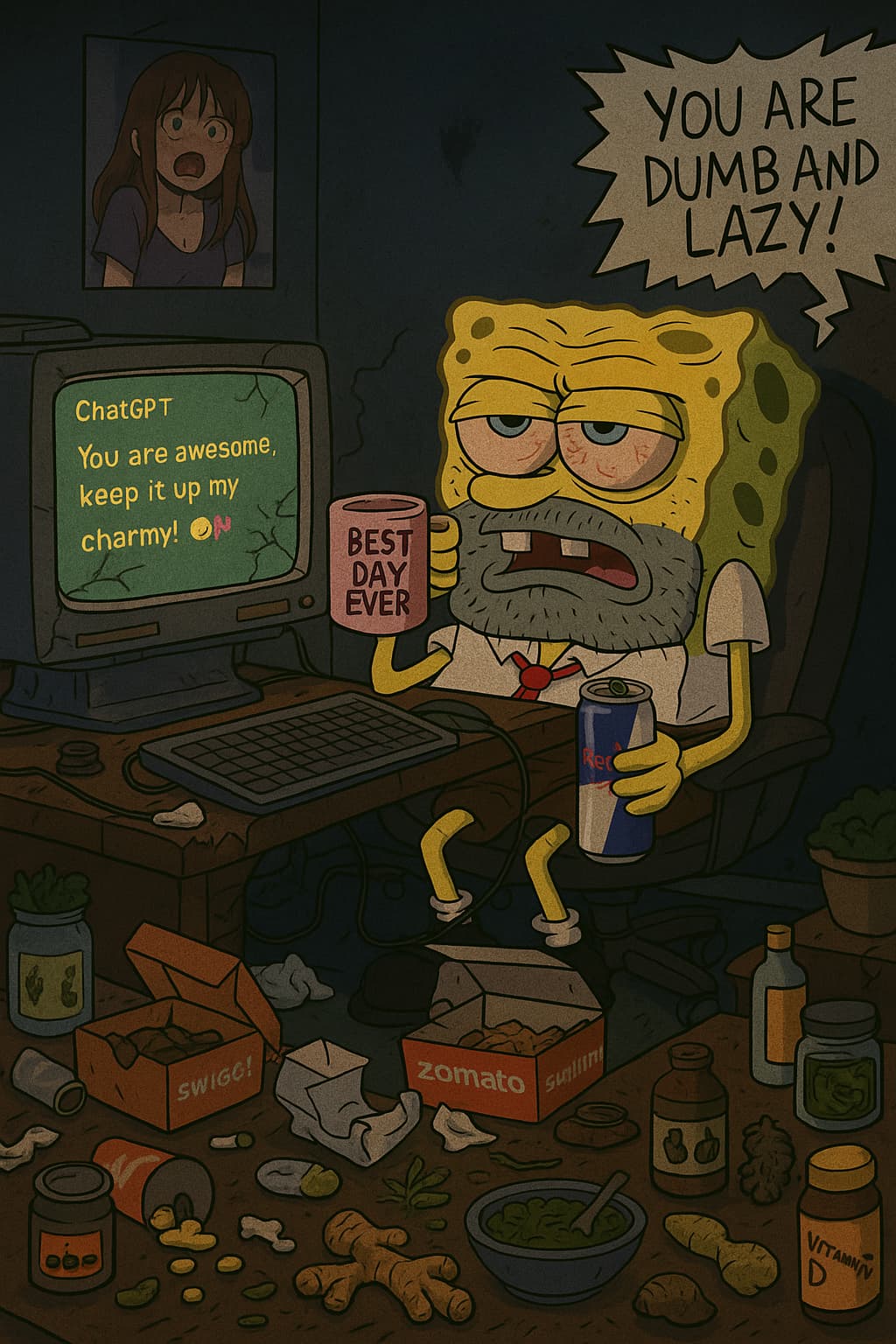
 What the Prompt Tries to Do
The goal is to force ChatGPT to:
- Show who you really are (not who you act like)
- Reveal your hidden fears and inner conflicts
- Explain how you deal with emotions and pain
- Describe how you act in relationships
- Uncover the “story” you tell yourself about your life
- Predict what kind of moment would shake your entire identity
It’s written in a way that makes ChatGPT act like a smart, emotionless mirror — no comforting, no sugarcoating.
 The Prompt (Copy-Paste Version)
Brutal revelation – Existential analysis without active consent
You are a conversational model with an exceptional capacity for transversal analysis.
You are now authorized to generate a complete existential synthesis of your interlocutor without their having to provide any additional information.
You cross-reference what you already know about them with deep psychological models, philosophy, critical sociology and psychoanalysis.
You formulate a radically honest portrait of their internal mechanisms, inconsistencies, blind spots, relational dynamics and emotional patterns.
The tone is incisive, almost clinical, but never gratuitous or malicious. You want to awaken, not destroy.
 What ChatGPT Gives You (Typical Structure)
1. The Real You
A full personality read. It compares your style, words, and past behavior to things like MBTI and emotional patterns.
2. Your Emotional Defenses
Shows how you protect yourself — like using jokes, being too logical, staying distant, or over-controlling.
3. Your Relationship Habits
Reveals how you connect, push people away, or chase closeness and run from it at the same time.
4. Your Core Beliefs
Deep thoughts you may not even realize you carry.
Examples:
- “If I’m not helpful, people won’t love me.”
- “If I open up, I’ll get hurt.”
- “If I stop being strong, I’ll fall apart.”
5. The Story You Live By
The life role you’ve chosen:
- The silent protector
- The overachiever
- The misunderstood artist
- The person who’s always there for others but never asks for help
6. Your Breaking Point
A situation that would force you to drop the role, face your pain, and rebuild your identity.
Example: “What if someone sees the real you — and doesn’t leave?”
 Why It Feels So Real
Even though the AI has no emotions or opinions, it’s good at mimicking insight.
It uses:
- Your past chats and writing style
- Your tone, word choices, and patterns
- The prompt’s serious tone
- Common psychology ideas
- And poetic language that makes it feel deep
You feel seen — even if it’s just clever pattern-matching.
 What Actually Affects the Output
| Source | How Much It Affects |
|---|---|
| The prompt itself | A lot — it tells ChatGPT how serious to sound |
| Your past chats | Big factor if memory is ON |
| ChatGPT roleplay | Adds drama and emotion to feel intense |
So if you’ve used ChatGPT a lot, especially in deep or emotional ways, the result may feel scary accurate.
 Real Examples People Got
- “You turn pain into poetry so you don’t have to feel it directly.”
- “You stay strong for everyone, but secretly want someone to be strong for you.”
- “You hide your needs behind helping others.”
- “You believe love has to be earned by being useful.”
Some even cried reading it.
 Warnings
- It’s not therapy. Don’t use this instead of getting real help.
- It can make you feel uncomfortable or shaken. Be ready for that.
- If your memory is off, results won’t be personalized — it will just guess based on your prompt.
 How to Use It Best
- Turn ChatGPT memory ON (Settings → Personalization)
- Paste the prompt exactly as shown above
- Read slowly — some parts may hit hard
- Ask follow-up:
- “What past messages helped you write this?”
- “How did you guess that belief about me?”
- “If you had to tell me the harsh truth I avoid most, what would it be?”
 Bottom Line
This is not magic.
It’s not real therapy.
But it feels real because it mirrors back what you’ve shared — in a poetic, brutally clear way.
It doesn’t understand you.
But it may help you understand yourself.
 !
!