AI Engineering: The Ultimate Path to Elevate Your IT Career 
Artificial intelligence engineers build the foundations for the design and delivery of trustworthy, consistent, and accurate AI experiences.

 Why AI Engineering Is the Next Big Move in IT
The IT landscape is evolving rapidly, and one of the most impactful shifts is the rise of AI engineering. Businesses across sectors — healthcare, finance, e-commerce, cybersecurity, and automation — are embracing AI-driven systems to improve efficiency and decision-making.
AI engineers are highly valued professionals, blending software engineering expertise with machine learning knowledge to create intelligent applications. This hybrid skill set makes AI engineers indispensable in the modern tech industry.
What Exactly Is AI Engineering?
AI engineering is the design, development, and deployment of AI-powered applications. It combines data science, software engineering, machine learning (ML), and DevOps principles to build scalable AI solutions.
Key Focus Areas:
- AI Model Development: Building ML and deep learning models.
- Data Processing: Cleaning, transforming, and analyzing massive datasets.
- AI System Integration: Embedding AI into enterprise systems.
- Scalable Deployment: Using cloud-native technologies for large-scale operations.
Why Choose AI Engineering for Career Growth?
- Unmatched Demand: Companies worldwide are competing for AI engineers to drive automation and innovation.
- Top-Tier Salaries: AI engineers earn some of the highest-paying roles in IT, with six-figure salaries being common.
- Future-Proof Profession: As AI adoption accelerates, demand for AI talent will continue to grow exponentially.
- Cross-Industry Opportunities: Work in healthcare, automotive, robotics, fintech, defense, and SaaS.
Key Deliverables for AI Engineering
From a business perspective, AI engineers’ key deliverables are:
1. Solutions to Complex Problems
Enterprises are loaded with complex problems that AI engineering can solve. For example, telecommunications companies can use AI to optimize network traffic and predict system failures, while health-care organizations can employ AI to diagnose diseases earlier, recommend personalized treatment plans, and improve patient engagement and care-plan compliance. The engineering behind these applications requires deep expertise in data engineering, algorithm development and system design — skills that AI engineers bring to the table.
2. Connections Between Data and Business Value
AI engineering is critical to translating data-driven AI technologies into business outcomes. AI models are only as good as their implementation and their life-cycle management (i.e., avoiding model drift in the field). It’s the job of the AI engineer to ensure that these models work seamlessly and continuously within business workflows and provide measurable value. Without proper engineering, even the most sophisticated AI models would fail to deliver tangible results. Industries like financial services and insurance (FSI) and health care rely heavily on AI to enhance risk management, automate routine tasks and drive innovative products — areas where AI engineers make a significant impact.
3. Scalable and High-Performance Systems
In any large-scale enterprise, AI solutions consume massive data sets and work seamlessly across distributed systems over different infrastructures (such as hybrid cloud). This requires AI engineers to design scalable architectures capable of handling increasing amounts of data without compromising performance. For industries like FSI, where speed and accuracy are paramount, AI engineers help ensure that models are optimized and adaptable to changing market conditions.
Challenges in AI Engineering
Despite its transformative potential, AI engineering comes with challenges:
1. Data Quality and Availability
AI models are only as good as the data they are trained and run (inference) on. Poor-quality data or inadequate access to data can undermine the success of the deliverables. Engineers often face the challenge of cleaning and preprocessing large data sets, ensuring they meet the stringent requirements of AI algorithms. In industries like health care where data may be highly sensitive and regulated, ensuring data privacy and compliance adds additional layers of complexity.
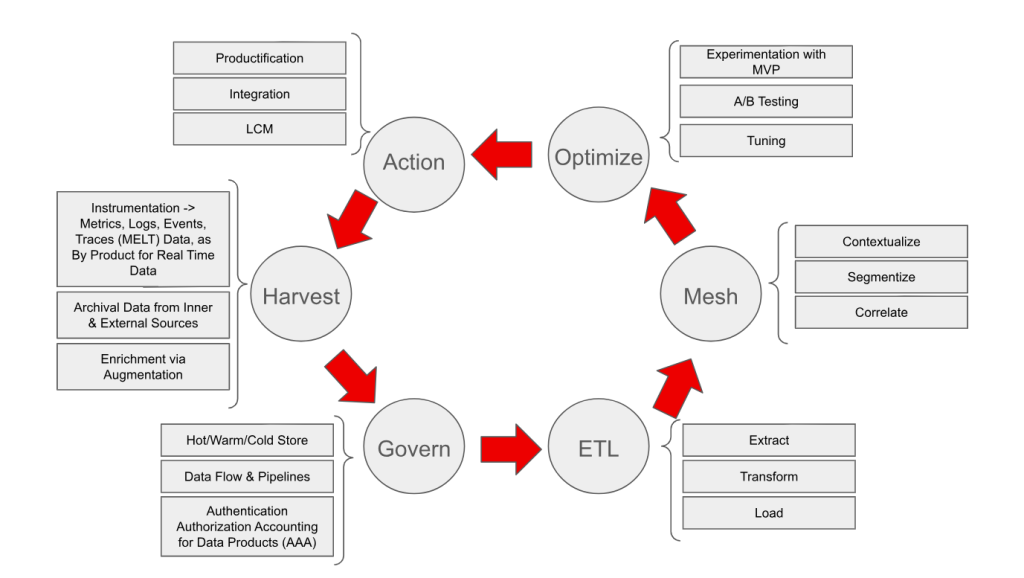
Harvesting archival (big volume) and fresh (velocity) data from internal and external data silos together with enrichment (augmentation) from different types (variety) of sources builds a strong data foundation. Even so, you need to evaluate the veracity (data accuracy) and value (usefulness of the data for aimed business use-case) as well (Figure 2).

2. Scalability, Performance and Security
AI models must scale efficiently across different enterprise workloads, which consumes AI over an abstracted access such as an API, with proper governance in place for authentication, authorization and accounting. AI engineers need to build architectures that can handle millions of data points in real time, which requires expertise in distributed systems and cloud computing platforms like Kubernetes and OpenStack. In industries like telecom, scaling AI models to handle real-time traffic is a critical component of success.
Another area of consideration related to security is data privacy and data sovereignty. Some industries and countries are particularly sensitive to where specific data (such as personally identifiable information, medical records or financial transactions) is processed and stored. AI engineers will want to take data sovereignty and privacy needs into account when picking the underlying platform, especially if they’re using public cloud platforms. Even for private clouds, data center location can be a cause for concern.
3. Model Management and Operations (ModelOps)
AI systems evolve over time, which means engineers must constantly monitor model performance and retrain models when they detect a reduction in performance.
In dynamic environments like financial markets or evolving health-care treatments, AI models may become outdated quickly, leading to model drift. AI engineers need to implement full model governance and pipeline capabilities to maintain serving models that stay relevant and accurate over time. (Figure 3 shows a sample workflow within an AI platform.)
4. Interpreting AI Results
One of the greatest challenges in AI engineering is not just ensuring model accuracy but making results understandable to stakeholders, which is commonly known as AI explainability. In high-stakes sectors like FSI and health care, transparency is critical; AI engineers must design systems that clearly articulate how decisions are made. This requires expertise in interpretability techniques as well as the ability to effectively convey complex AI insights to nontechnical audiences, fostering trust and informed decision-making.
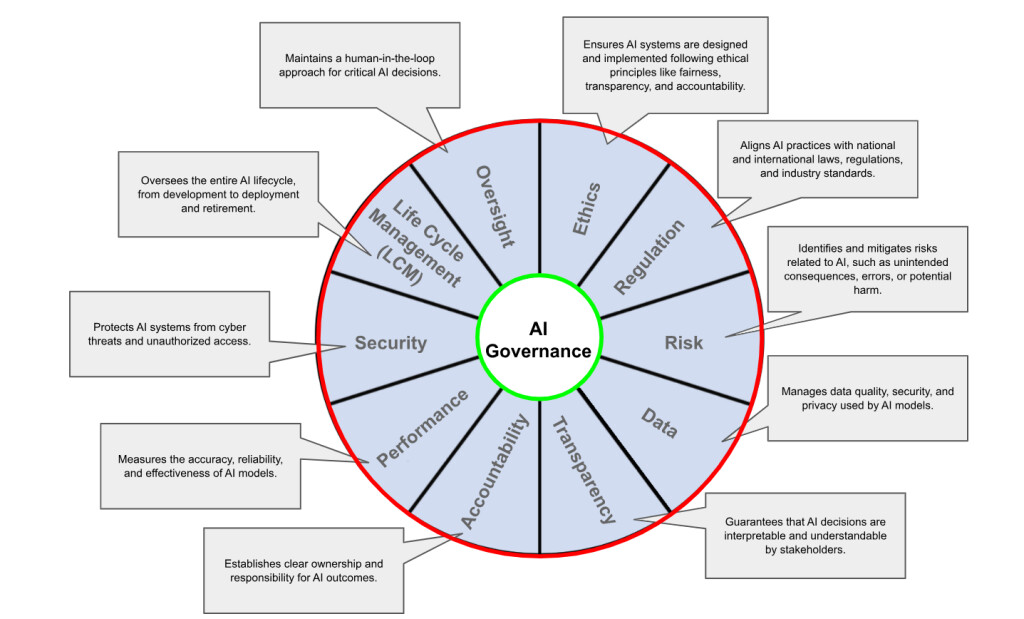
These are only four of the 12 major challenges presented in the AI governance wheel (Figure 4). It’s crucial that all parts of AI governance, including associated ownership and accountability, are taken seriously.
 How to Grow Your Career as an AI Engineer
AI engineering is a rapidly evolving field, and staying ahead requires a blend of technical expertise and business acumen. Here’s how you can take your career to the next level by becoming an AI engineer:
1. Master Data Engineering and AI Pipelines
AI engineering is deeply related to data engineering. You must be proficient in managing data pipelines, ensuring data quality and deploying data for model training. It’s important for AI engineers to master data analytics and data science tools like Apache Airflow, Spark, Kafka and Hadoop, and get hands-on experience with AI platforms like Red Hat OpenShift AI and infrastructures like Google Cloud Platform (GCP), Oracle or AWS. Many industries, including telecommunications and health care, rely on efficient data management and orchestration for successful AI applications.
2. Deepen Your Understanding of Machine Learning
AI engineers must be well-versed in machine learning models and deep learning algorithms. They may want to become familiar with the tools and packages model builders, AI scientists and data science teams use, such as PyTorch, Keras, Tensorflow and Accelerator frameworks. Understanding how to select, train and optimize models is critical to solving industry-specific problems. For example, in telecom, knowledge of machine learning algorithms and models that handle structured and unstructured network data is crucial.
3. Specialize in an Enterprise AI Domain
While AI can be applied across a wide range of industries, specializing in a domain like telecom, FSI or health care can make you highly valuable. For instance, in telecommunications, AI engineers who understand network optimization and predictive maintenance can help companies save millions by preventing outages. In financial services, expertise in fraud detection and risk analysis can lead to better decision-making systems.
4. Focus on AI System Architecture and Scalability
Scalability is a major concern for enterprises looking to deploy AI solutions at scale. AI engineers must design robust architectures that can handle large amounts of data and computational workloads. Familiarize yourself with tools like OpenShift, Podman, GitOps and multicluster management, and become adept at building scalable, distributed AI systems.
5. Develop Soft Skills
AI engineers need more than just technical and computer science skills. Adeptness with business communication and stakeholder management are keys to advancing in your career. Being able to translate complex AI concepts into business language is essential for aligning AI initiatives with enterprise goals. Understanding the business value of AI, and being able to present that value to stakeholders, is crucial for career growth.
6. Stay Ahead of AI Trends and Technologies
AI is a constantly evolving field, and it’s essential to stay up to date with the latest technologies and trends. Continuous learning through certifications, attending industry conferences and participating in AI communities will help you remain competitive. Industries like health care and telecom are rapidly adopting new AI technologies, and staying current with the latest data science advancements with resources like The Hitchhiker’s Guide to the AI-Native Telco Galaxy will position you as an expert in your field.
Essential Skills for an AI Engineer
To thrive in AI engineering, focus on these skills:
- Programming Languages: Python (must-have), Java, C++, R
- Machine Learning Frameworks: TensorFlow, PyTorch, Scikit-learn
- Data Handling: SQL, NoSQL, Hadoop, Spark
- Mathematics & Statistics: Probability, linear algebra, calculus
- Cloud AI Services: AWS SageMaker, Google AI Platform, Azure AI
- MLOps & Deployment: Docker, Kubernetes, CI/CD pipelines
Step-by-Step Guide to Becoming an AI Engineer
- Start with Programming: Learn Python, as it’s the backbone of AI development.
- Understand AI Fundamentals: Cover ML algorithms, deep learning, and neural networks.
- Hands-On Projects: Apply skills using TensorFlow or PyTorch.
- Explore Big Data: Understand data pipelines and distributed computing.
- Learn AI in the Cloud: Gain expertise in AWS AI, Azure Cognitive Services, and Google Cloud AI.
- Develop MLOps Skills: Automate workflows using CI/CD pipelines for AI models.
- Stay Updated: Follow research papers, AI blogs, and GitHub repositories.
Top Free AI Learning Resources
- Google AI – Research and tutorials from Google AI.
- TensorFlow Tutorials – Practical deep learning guides.
- PyTorch Learning – Hands-on ML model development.
- AWS Machine Learning – Cloud-based AI solutions.
- Microsoft AI School – AI concepts and hands-on labs.
- Kaggle – Datasets and competitions to practice ML.
Career Roles in AI Engineering
- AI Engineer: Building intelligent systems and automation solutions.
- Machine Learning Engineer: Designing and training ML algorithms.
- Data Scientist: Extracting insights and building predictive models.
- AI Researcher: Driving innovation in AI algorithms and applications.
- AI Solution Architect: Integrating AI into enterprise ecosystems.
 Salary Trends and Job Market
- Entry-Level AI Engineer: $90,000 – $120,000 annually.
- Mid-Level with Experience: $130,000 – $160,000 annually.
- Senior AI Engineer / Specialist: $170,000+ annually.
Top Hiring Companies: Google, Amazon, Microsoft, NVIDIA, IBM, Meta, Tesla, and leading startups.
 The Future of AI Careers
The AI job market is projected to grow by 40% in the next decade, creating millions of new roles worldwide. Skills like natural language processing (NLP), computer vision, and generative AI will dominate future demand.
AI engineering is a crucial function in modern enterprises, enabling businesses to unlock the full potential of AI technologies. The importance of AI engineers is particularly evident in industries such as telecommunications, financial services and health care, where AI solutions drive innovation, operational efficiency and competitive differentiation.
However, AI engineering also comes with challenges, from ensuring data quality to addressing model drift and interpretability issues. By developing a deep understanding of the business context, mastering the technical aspects of AI and improving communication skills, AI engineers can overcome these challenges and grow their careers to the next level. As industries continue to embrace AI, engineers who can deliver scalable, impactful solutions will be at the forefront of driving enterprise transformation.
 Pro Tip: Combine AI engineering skills with domain expertise (finance, healthcare, robotics) to become a specialized, high-value professional.

 !
!