I wanted to share a quick experience and get some guidance.
While working on my university assignments with the help of AI, things got really hectic. A friend suggested I try a tool called “Stealth Writer,” so he got subscription for me and i used it and got my work completed.
And here comes the second submission Free version It worked fine initially, but right when I had a submission deadline, their server went down and the tool was only available for paid users at that moment.
That situation pushed me to try building my own version of a “stealth writer” / AI humanizer.
So far, I’ve managed to build something that actually works. The text it generates is much more human-like, and when I test it with AI detection tools (including Stealth Writer’s detector), it usually shows low AI percentages often around 10%, and most results stay under 15–18%.
Now I’m at a point where I’d really appreciate some guidance:
How can I improve this further to make the output even more natural and reliable?
What are the best ways to scale something like this technically?
How should I deploy it (web app, API, etc.)?
And most importantly, what’s the best way to launch and get this in front of other users?
I’d love to hear your thoughts, suggestions, or even similar experiences.
if node.js, Python,PHP or any other “web friendly” language it can be deployed easily via docker and a common web hosting
Do you want deploy it as a open source app?
If yes, the best approach is create a Github account with apache 2.0 license and deploy the code, then if was built in some web language like node js or python, deploy with github codespace to start, and scale up with a public cloud like AWS or GCP if you need heavy power or some hosting platform like Hostinger if you need a moderate use, even a free tool like vercel may be use (at free tier with some limitation)
about improove the output, I dont have much experience with it, I’ve customized some LLM at my work, but nothing so specialized like your.
Right now, I built it using Python + Node.js, mainly focusing on getting the core rewriting logic working first. I haven’t fully optimized the deployment side yet.
About open source I’m still deciding. Part of me wants to open it up and get community feedback, but I’m also thinking about turning it into a small product first and seeing how it performs. Maybe I’ll start closed and later release a limited or lite version as open source.
Also good point on GitHub Codespaces I hadn’t really considered that for initial setup.
For improving output, yeah it’s been a lot of trial and error with prompts and rewriting strategies so far. I’m now trying to make it more consistent and less “pattern-like,” since that’s where AI text still feels obvious.
Thanks again for taking the time to share all that it really helped!
With Python and node the default pipeline is create a CI/CD with Docker and then deploy it, even if you intend create a Saas subcription based software, you can create a container and use a hosting solution, your project is web friendly and can be deployed without complications, a extra tip is if possible create two separate projects one to your frontend and another to backend, it will help when you need modify a feature and allow isolations at docker deploy pipeline.
Hey man, solid hustle turning that frustration into your own tool.
Congrats on already getting it down to 10-18% on detectors, that’s honestly better than a lot of the paid ones out there.
On making it even more natural/reliable:
Vary sentence rhythm and structure heavily. Humans ramble, use fragments, contractions, and sometimes repeat ideas for emphasis. Train or prompt it to occasionally add personal asides, transitional fluff (“honestly though…”, “the thing is…”, etc.).
Inject micro-imperfections. Light typos (that you can toggle), colloquialisms, regional slang if it fits the audience, or slight redundancy. But keep it controlled—nothing that screams “I’m trying too hard.”
Multi-pass approach. Generate → humanize → rewrite specific paragraphs with different temperatures or models → final light edit pass. This breaks up patterns.
Context & style memory. Feed it examples of the user’s own previous human writing (if they have any) or target styles (e.g., “university business student, slightly casual but academic”).
Test against multiple detectors regularly (Originality, GPTZero, Winston, etc.), not just one. Detectors keep updating, so what works today might slip in a month.
Scaling technically:
Start simple. If it’s prompt-based right now, look into fine-tuning a smaller open model (Llama 3.1 8B or Mistral variants, or even Phi-3) on a dataset of human vs AI text pairs. Or use LoRA so it’s cheap.
For speed/cost at scale, mixture-of-agents or routing between models (cheap one for first pass, stronger for refinement) works well. Monitor token usage obsessively.
Deployment:
MVP: FastAPI backend + simple React/Next.js frontend. Host on Vercel + Railway/Render/Fly.io. Super cheap to start.
Add user accounts (Supabase or Clerk for auth), credit system (they buy “words” or monthly subs), and a queue if it gets heavy.
Later: Turn it into a proper API so other devs or power users can integrate it. Chrome extension would be killer for students (direct “Humanize” button in Google Docs, etc.).
For Design:
You can check these two sites which were shared by some users in 1h
The “AI writing app” they charge you $20/mo for is ~20 free open-source tools taped together — the model API is 5% of it. Here’s the full parts list. Runs on your machine, your text never leaves, no coding degree needed.
┌──────────────────────────────┐
│  ✍️  editor people type in    │
├──────────────────────────────┤
│  🧠 grammar / style engines   │
│  🎛️ clean output + PII scrub  │
│  📚 memory (RAG + search)     │
│  🔌 model gateway + local AI  │
├──────────────────────────────┤
│  👀 watch · 💸 cache · 🏦 biz  │
└──────────────────────────────┘
      all free · all open-source
Agency/freelancer: hand each client a private “brand voice” editor instead of paying per-seat Grammarly Business — their drafts never leave your server.
You write in a language Grammarly ignores: LanguageTool self-hosts 25+ languages, free.
Indie/student: ship a niche writing tool (for lawyers, screenwriters, doctors) this weekend — fork an existing app, no funding, no degree.
Privacy work (legal/medical/journalism): run the whole thing offline, text never touches OpenAI.
Paying for 5 AI subs? One gateway swaps them all and kills the per-token bill — one bill, not five.
🧠 the 90% that isn't a ChatGPT wrapper
Grammar/style checkers that run under the AI, so you’re not paying a model to catch a typo.
Harper+Vale+local AI = Grammarly Premium, 100% local
🔌 one plug for every model + run it free on your box
A gateway = one API for every model (swap OpenAI↔Claude↔free-local by changing one line, auto-failover). Local inference = run open models yourself, data stays home, per-token bill → $0.


 Build your own Grammarly. From free parts. $0.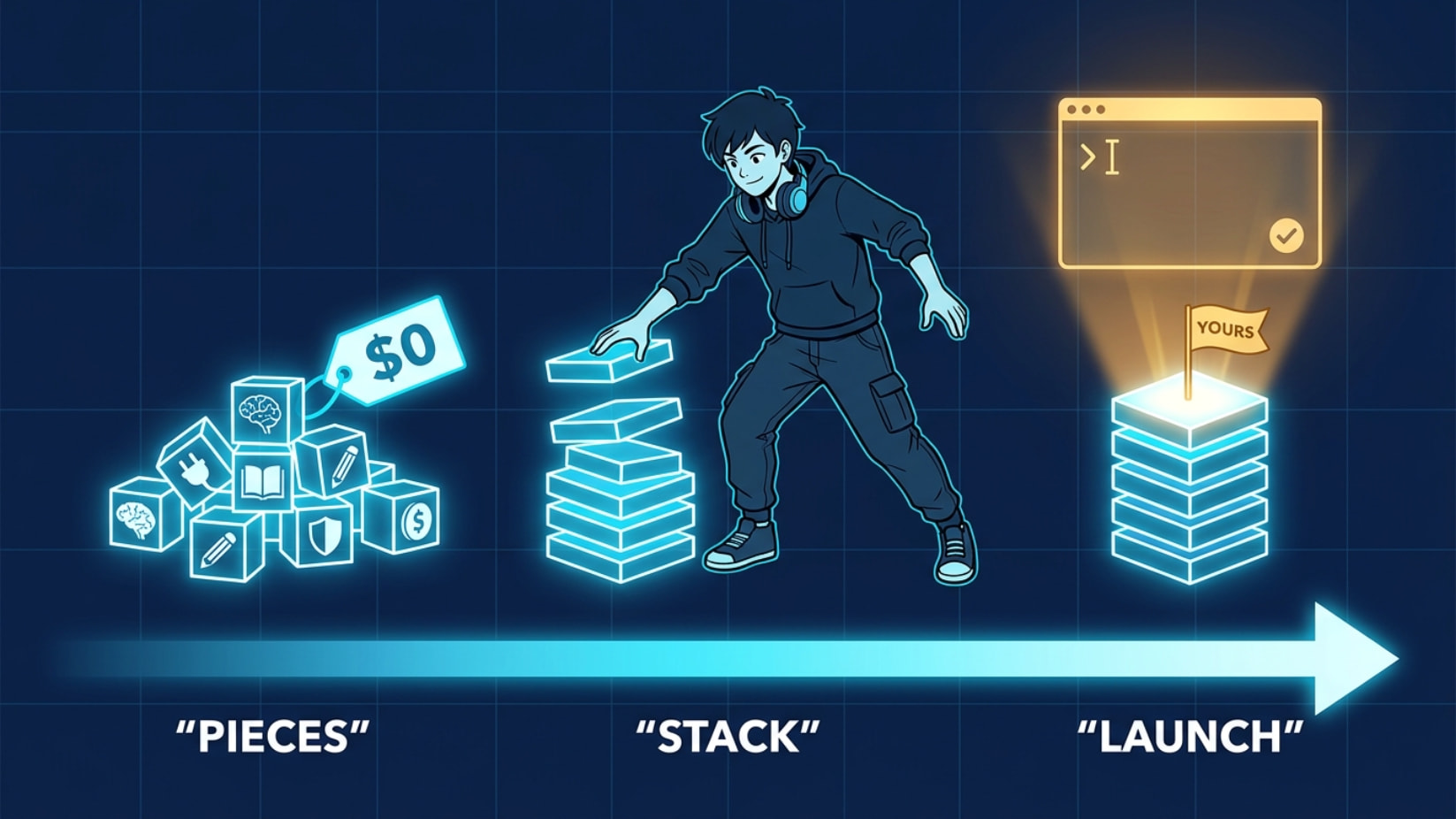

 Agency/freelancer: hand each client a private “brand voice” editor instead of paying per-seat Grammarly Business — their drafts never leave your server.
 You write in a language Grammarly ignores: LanguageTool self-hosts 25+ languages, free.
 Indie/student: ship a niche writing tool (for lawyers, screenwriters, doctors) this weekend — fork an existing app, no funding, no degree.
 Privacy work (legal/medical/journalism): run the whole thing offline, text never touches OpenAI.
 Paying for 5 AI subs? One gateway swaps them all and kills the per-token bill — one bill, not five.
 It was never a $20 product. Just $0 parts nobody stacked in front of you — until now.
 The Core-Community team’s AI turned the answer above into a better version.
 !
!