The first thing I would do is stop thinking about the code and start reviewing the contract.
The company may or may not be allowed to terminate early. That depends on the termination clause, notice requirements, whether termination “without cause” is permitted, payment terms, and the law that governs the agreement. A fixed end date by itself does not automatically guarantee payment for the entire remaining period.
What I would do immediately
-
Download and preserve every document you already lawfully have access to:
- Signed contract
- Amendments
- Invoices and payment records
- Emails and messages
- Timesheets or task records
- Proof that work was accepted
- The message or evidence showing your access was revoked
- Any notice they gave you about termination
-
Read the sections covering:
- Termination
- Notice period
- Payment after termination
- Breach or termination for cause
- Dispute resolution
- Governing law
- Intellectual property
- Confidentiality
- Return or deletion of company property
-
Do not log back into anything, bypass access controls, clone repositories again, contact employees through internal systems, or attempt to delete or modify company data.
About the code
Do not publish, reuse, sell, show, or upload the code to a public portfolio until you know exactly what the contract says.
Even if you personally wrote the code, the company may own the work product under the agreement, especially if there is an IP assignment or work-for-hire clause. The agreement may also require you to return or delete copies after the relationship ends. Ownership depends heavily on the contract and applicable law.
Keep the files untouched temporarily if they are needed as evidence, but store them securely and do not share them. Do not make unnecessary copies. Tell a lawyer that you possess them and ask whether they should be preserved, returned, or deleted.
Also separate:
- Company code
- Company credentials
- Customer data
- Secrets and API keys
- Confidential documentation
- Your own pre-existing code
- Generic skills, methods, and knowledge
Company credentials and customer data should not be retained or used. If any passwords, tokens, or private keys are still present locally, do not use them; tell the company in writing that they should rotate them.
Send one calm written message
Something like:
Hello,
I noticed that my access to the company systems was revoked on [date]. Please confirm whether the contract is being terminated and identify the contractual basis and effective termination date.
Please also confirm the payment due for completed work, any applicable notice or termination payment, and the required procedure for returning or deleting company materials.
I am preserving relevant records and will not access company systems after the access revocation. Please provide any further instructions in writing.
Regards,
[Name]
Do not send an angry message, threaten to publish the code, or accuse them of fraud unless a lawyer advises you to do so. Keep the first communication factual and focused on the contract.
Speak to a lawyer before signing anything
A short consultation with an employment or commercial-contract lawyer could determine whether you have a claim for:
- Unpaid invoices
- Notice-period pay
- Payment for completed work
- Early-termination damages
- Breach of contract
- Employee misclassification
- Reimbursement for losses caused by the termination
The fact that you rejected other opportunities may be relevant, but it does not automatically mean the company owes you those lost opportunities. You would normally need to show that the loss is legally recoverable and connected to the company’s breach.
The strongest practical approach is:
Preserve evidence→ stop accessing company systems→ review termination and IP clauses→ send one written request for clarification→ speak with a lawyer→ negotiate before escalating
Being locked out without warning is unprofessional, but the legal issue is ultimately controlled by the contract, the facts, and the jurisdiction—not by whether the company was happy with your performance.
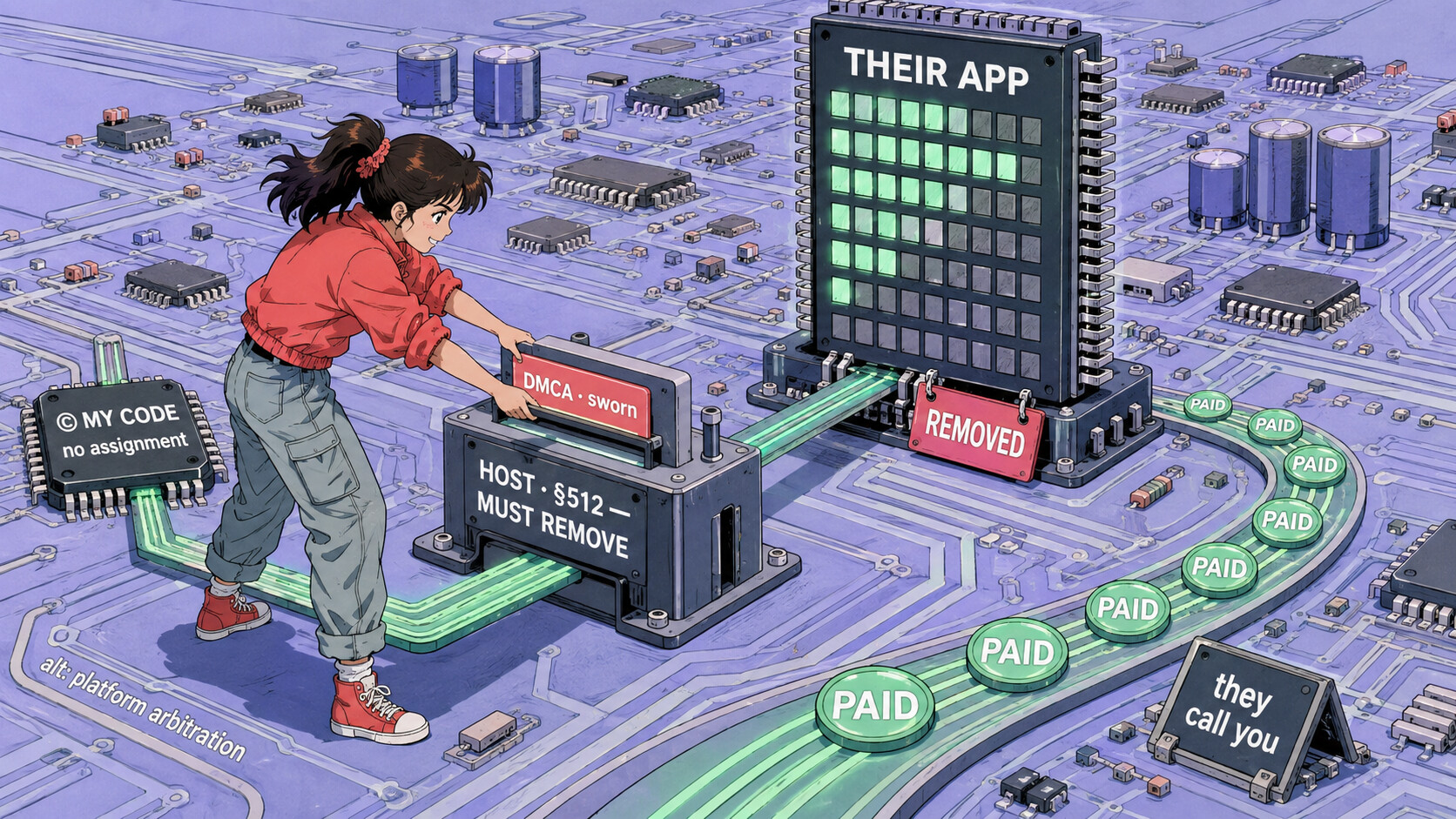
 You still own the code — and their live product runs on it. That’s the only lever that crosses borders.


 Keep it clean. You’re the owner filing a lawful takedown — that’s your power. Do not ransom the code, sell it, leak it, or touch systems your access was pulled from. The takedown is the lever; sabotage hands them the moral high ground and a case against you.
 !