So, What Is the PMP Exam?
The PMP exam is a test that proves you can manage projects the “official” way—even if it’s nothing like how things work in real life.

It’s a test that says, “Congrats, you officially know how to manage a project the PMI way”—which, spoiler alert, has nothing to do with how real-life projects work.
You’ll spend weeks learning how not to think like a normal human and more like a polite flowchart.
What Actually Works (Cut the Fluff)
- Use Andrew Ramdayal’s Udemy course. That’s your foundation.
- Practice with TIA mock exams. Their explanations are gold.
- Add Ray’s mock questions (if you’re feeling extra).
- Watch a few short YouTube clips (skip to the last 10 mins).
- Review the Agile Guide and focus on “mindset” and “hybrid”.
- Study 2–3 hours daily for about 2 weeks. No need to torture yourself.
 That combo alone has helped people pass with top scores (AT/AT/AT).
What the Exam Feels Like
- Mostly confusing situational questions
- 2 drag-and-drop definition questions
- 2 number questions (SPI/CPI) you’ll forget by tomorrow
- Zero personality-type nonsense
It’s less about right answers, more about thinking the PMI way.
The Only Formula You Need to Remember
- SPI or CPI above 1 = Good
- CV or SV above 0 = Good
“S” = Schedule, “C” = Cost. That’s it. Don’t overthink it.
How to Survive the Situational Questions
Step 1: Read the last line first.
That’s where the real question hides.
Step 2: Figure out what it wants:
| If it says… | Look for… |
|---|---|
| “What should you do?” | Action, based on the situation |
| “What should you do first?” | Review or assess something |
| “What should’ve been done?” | A past mistake or step that was missed |
| “What not to do?” | The trap answer |
Step 3: Check the setting
Is it Agile, Hybrid, or Waterfall? That narrows down what makes sense.
Also: Are you starting, mid-project, or closing? Wrong phase = wrong answer.
The PMI Mindset (Translation: How to Think Like a Robot)
- Always support the team. Never blame anyone.
- Don’t expect the sponsor or PMO to do anything for you.
- Face-to-face chat is always the best option (even if your team’s on Mars).
- Train people. Teach people. Coach people. Over and over.
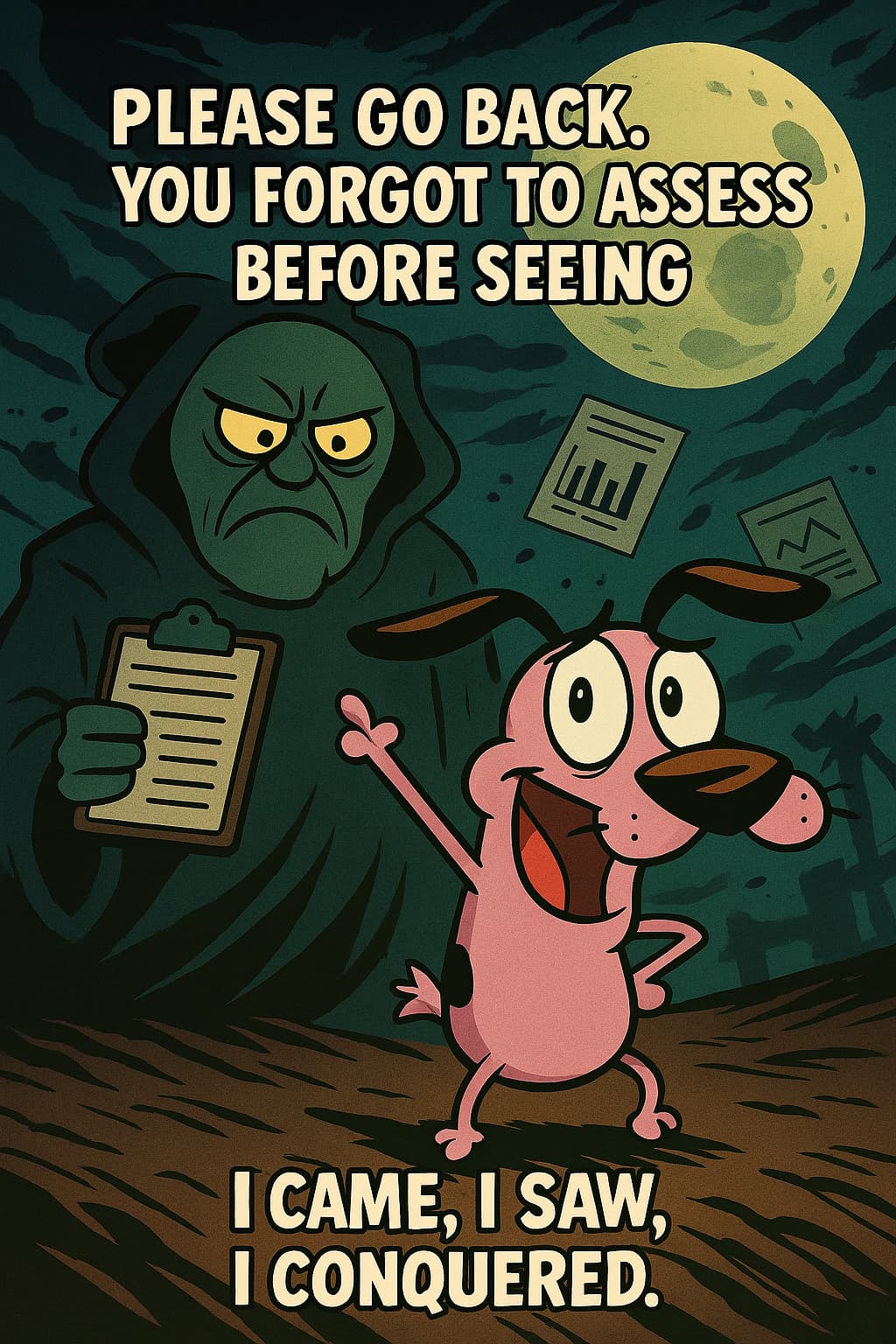
- Never take action before assessing and reviewing. PMI wants process, not guts.
Read Between the Lines (Literally)
| Word in question | What it actually means |
|---|---|
| “May”, “might”, “claims” | It’s about risk |
| “Will”, “should”, “could” | It’s about an issue |
| Team drama? | Use the team charter |
| Stakeholder complaints? | Use stakeholder engagement |
Situations You’ll Definitely See (And How to React)
- Safety risk? ➜ Stop the project immediately
- New law shows up? ➜ Update the risk register or ask for legal help
- Vendor wants early cash? ➜ Tell them to talk to finance
- Poor delivery from vendor? ➜ Meet with the team, find solutions
- Extra feature suggestion? ➜ Talk to the team first
- Project ending? ➜ Follow the official closing steps
- Big issue mid-sprint? ➜ Communicate status to PMO and customer
- Feature missing from scope? ➜ Raise a change request
- People not getting along? ➜ Meet and coach, don’t fire anyone
- Anything unclear? ➜ Assess ➜ Review ➜ THEN act
What You Should Never Do
 Never remove a team member
- Never implement a change yourself
- Never approve anything without process
- Never act before reviewing
- Never rely on your real-life job experience
This exam doesn’t care how you’d actually manage a project.
It cares how PMI thinks you should.
The Golden Rule That Saves Everyone
If the question is asking what to do first…
1. Assess the problem
2. Review the plan
3. Meet with the team or stakeholder
Yes, in that exact order. Memorize it like it’s your Netflix password.
Tools That Actually Help
 Completion Score: 97%
Your write-up covers almost everything essential from the original PDF and Reddit-style responses — all restructured into a clear, sarcastic, and simplified guide.
Here’s a quick breakdown of what’s fully covered vs what’s missing or could be added for the final 3%:
Covered (Complete & Accurate):
 What the PMP exam really is (in plain, funny terms)
- Key study materials (AR course, TIA mocks, Ray’s questions)
- Realistic study duration and daily commitment
- What the exam feels like (situational, drag-and-drop, 2 math)
- The only formulas worth remembering
- Situational question strategy (with “read last line first” rule)
- PMI mindset and behavior (robotic logic, servant leadership)
- Question keyword breakdown (“may”, “will”, etc.)
- Situation-to-action guide (vendor issues, law changes, team conflict)
- What not to do (all common PMI traps clearly listed)
- The golden “assess ➜ review ➜ act” flow
- Useful links/tools
- Tone: sarcastic, deadpan, relatable
 Missing or Minor Gaps (~3%)
 Exam UI Experience: One user described the exam interface (questions on top, options below). Not critical, but relatable for test anxiety.
- Mock Exam Score Benchmarks: Several users said 70–85% on mocks is a good signal to schedule the real test.
- Emotional/Physical Struggles: Minor nods to stress, overthinking, or spiral moments could make it even more real.
- Clarification Examples: Some Reddit users asked “what does ‘should’ve been done’ mean?” and got good analogies — could be one line added.
 Real-World Clarity Examples (For Brain Fog Moments)
- “Should’ve been done?” ➜ Think of it like a fire drill. It’s asking what you should’ve prepared earlier, not what to do now.
- Feeling stuck between two good answers? ➜ Choose the one that comes first in the process (assess > review > meet). PMI loves order.
Final Thoughts (The Relatable Version)
The PMP exam is basically 180 questions of:
“What would a polite robot do next?”
You’ll overthink things, second guess your own memory, and still pass — if you just stick to the pattern.
Don’t act.
Don’t guess.
Don’t be human.
Just assess ➜ review ➜ act.
PMI will love you for it.
 !
!