 Steam’s Stranglehold: 72% of Devs Call It a Monopoly
Steam’s Stranglehold: 72% of Devs Call It a Monopoly
One-Line Flow:
72% of game devs say Steam isn’t a platform anymore — it’s the entire PC gaming economy, and no one’s escaping it.

 Dumb Mode Dictionary
Steam: The app where your 200 unplayed games quietly judge you.
Rokky: The folks who ran this survey — and also sell tools to help devs avoid Steam. Yeah.
Grey market: Where stolen or duped game keys go to become “discount deals.”
For  1Hackers
A survey of 300+ gaming execs (US + UK) says:
- 72% think Steam’s basically a monopoly.
- 88% say it gives them at least 75% of their sales.
- 37% say 90% of their entire revenue is Steam.
- 53% worry they’re too dependent on it.
- 80% plan to diversify within 5 years — good luck with that.
Steam’s not just the store — it’s the oxygen.
 What’s Changing
Devs aren’t just mad about competition anymore — they’re mad about the math.

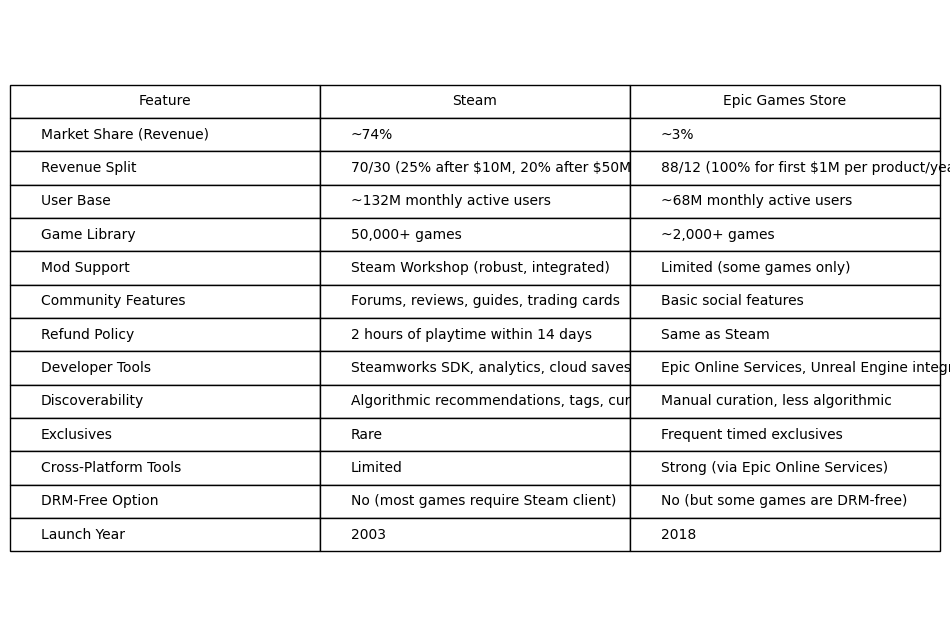
- Steam takes a 30% cut.
Drops to 25% after $10M and 20% after $50M — perks only for the rich. - Epic Games Store offers an 88/12 split (devs keep 88%)
and now gives 100% revenue on the first $1M/year per product.
Yet Epic still holds only ~3% of market revenue, even with 295M users. - Steam? It’s sitting comfy at ~75% market share by downloads and 74% by revenue.
So yeah — math hurts.
 The Real Pain Points
- Refund roulette: Steam’s 2-hour refund policy kills short indie games.
Some devs quit the industry because players just speedrun and refund. - Grey market chaos:
Stolen credit cards → fake keys → sites like G2A → chargebacks → devs pay fees on top of losses.
It’s not lost revenue — it’s negative revenue. - Overcrowded market: Thousands of games release monthly; discovery is a nightmare.
- Free-to-play monsters: Fortnite, CS2, Warzone, Roblox — they eat wallets and attention spans.
 Why Steam Still Wins
It’s not just price or polish — it’s lock-in.
- Decades of user libraries
- Workshop mods
- Achievements, badges, trading cards
- Built-in communities
- Algorithms that actually help good games surface
Epic has numbers — Steam has roots.
 Hidden Catch
The survey came from Rokky, a company that profits from devs wanting Steam alternatives.
So yeah, take it with a pinch of monetized irony.
Oh Great, Steam Owns Everything — So What the Hell’s Left for Us? (╯°□°)╯

-
 Key-Flip Arbitrage – Track grey-market sites like G2A or Eneba → spot trending titles on discount → resell Steam keys during sale spikes. Low skill, quick flips.
Example: A small group in Poland ran a weekend-only “Steam Flash Mirror” bot that bulk-bought cheap Rust keys from LATAM sellers before updates — reselling them at 3× on European marketplaces within 48 hours. -
 Steam Sale Tracker Bot – Build or use free tools to auto-track price drops → sell that data as a “Deal Alert” Telegram channel or newsletter. Monetize via affiliate links.
Example: A Brazilian Telegram channel, SteamInsano, started as a simple bot reposting SteamDB price dips — now it’s sponsored by payment app PicPay and gets 80k+ clicks per sale weekend. -
“Refund Window” Review Hustle – Try new indie games under 2 hours → write bite-sized reviews or TikTok clips → refund if broke → earn affiliate traffic from views.
Example: A Filipino TikToker, @GameSnack, reviews new Steam releases in 90 seconds using this method — racking 4M monthly views and Amazon affiliate gear links under each video. -
 Digital-Vault Curator – Build a public Notion or site tracking the “Best Free Steam Games” + referral links → evergreen traffic, ad revenue.
Example: A student in Turkey made Free2PlayVault.com — a Notion-powered index of working free games, events, and DLCs — now pulling 200k+ visits/month and $300–400 in AdSense quietly on autopilot.
 Simple-Pimple Summary
Steam’s monopoly isn’t a wall — it’s a blueprint.
Every “locked” system hides cracks where clever people build exits that pay rent.
You don’t need a dev studio. You need curiosity, a half-broken laptop, and the nerve to act before someone else automates it.
Because in 2025, the richest players aren’t building games —
they’re gaming the platforms. (☉_☉)
Final Thought
Everyone screams “monopoly” like it’s a crime.
But Steam didn’t steal the market —
it earned everyone’s laziness.
 In Short
Epic gives better deals.
Devs still stay with Steam.
Because loyalty isn’t logical — it’s built on sunk cost and dopamine.
 !
!