 UK Deleted One Letter of Barley DNA — Cows Now Burp 15% Less Methane
UK Deleted One Letter of Barley DNA — Cows Now Burp 15% Less MethaneBritain just approved its first gene-edited crop for livestock trials. One nucleotide removed. No genes added. The cows get fatter, the atmosphere gets cleaner, and the EU is still pretending it’s 2003.
Rothamsted Research removed a single DNA letter from two genes in Golden Promise barley — regulators greenlit feeding it to cows, and the results cut methane emissions by up to 15% per animal.
The barley isn’t classified as genetically modified. No foreign DNA was inserted. They just… deleted a character. Like a typo fix for biology. And somehow that makes cows fatter, faster to market, and less of a climate liability. Meanwhile the EU won’t approve any gene-edited crops at all. Same planet, different century.
🧩 Dumb Mode Dictionary
| Term | What It Actually Means |
|---|---|
| Gene editing | Changing an organism’s existing DNA — not adding foreign DNA from another species |
| Golden Promise barley | A specific barley variety, originally from Scotland, now used as the guinea pig for UK gene editing |
| Lipid-rich feed | Feed with more fat in it — cows absorb calories faster, so they reach slaughter weight sooner |
| Methane-generating microbes | Bacteria in cow stomachs that produce methane as a byproduct of digestion. Fewer = less cow burps |
| robots.txt | Wait, wrong article. Never mind |
| Post-Brexit freedom | UK can now make its own biotech rules without asking Brussels first |
| Gene-edited vs. GMO | If you only tweak existing DNA = gene-edited (UK says OK). If you add DNA from another organism = GMO (everyone argues about this) |
📖 Backstory: Why Are We Editing Barley?
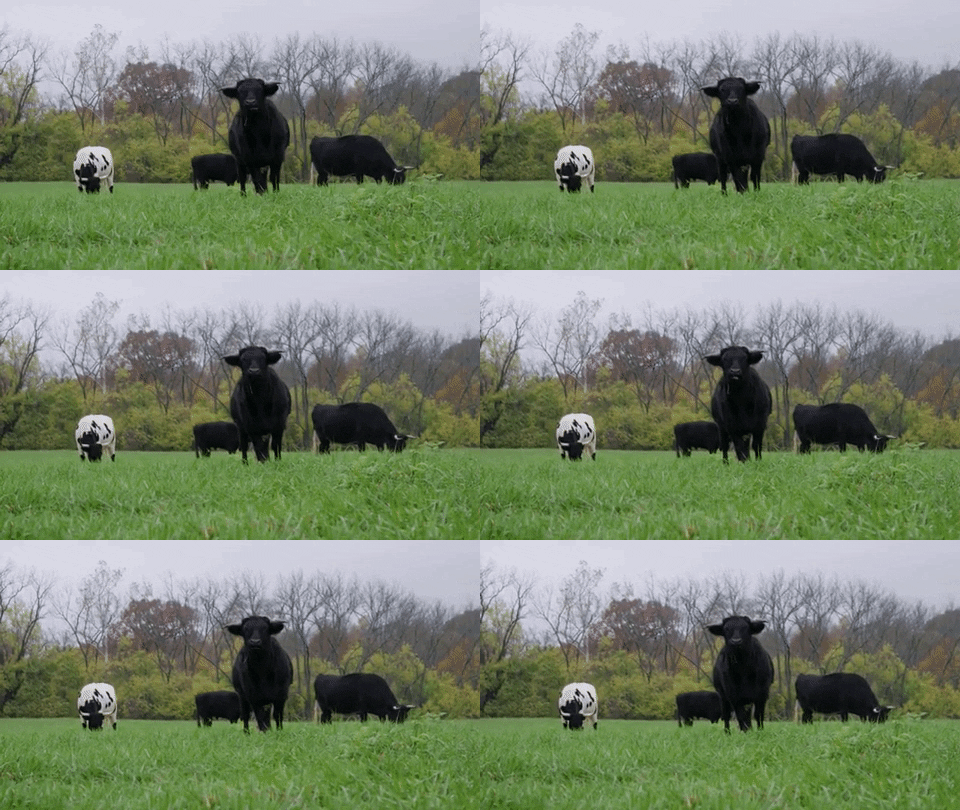
Right, so here’s what’s actually happening. Livestock farming produces about 14.5% of global greenhouse gas emissions. A huge chunk of that is methane from cow digestion — specifically from microbes in their multi-chambered stomachs.
Professor Peter Eastmond at Rothamsted Research (one of the oldest agricultural research institutions in the world, founded in 1843) figured out that if you increase the fat content of barley, it changes the gut bacteria composition in cows. Fewer methane-producing microbes survive. Less methane gets burped out.
The edit itself is almost comically minimal: one nucleotide deleted from each of two genes. That’s it. The genes get switched off, the barley produces more lipids, and the downstream effects cascade through the cow’s digestive system.
⚙️ What Exactly Changed in the Barley
| Detail | Spec |
|---|---|
| Barley variety | Golden Promise |
| Number of genes edited | 2 |
| Type of edit | Single DNA letter removed from each gene (switches them off) |
| Foreign DNA added | None — zero |
| Regulatory classification | Gene-edited (NOT genetically modified) |
| Effect on barley | Higher fat/lipid content |
| Effect on cows | Faster weight gain, more milk, reduced methane |
| Methane reduction | Up to 15% per cow |
| Approved for | Feeding trials (not consumer sale yet) |
| Institution | Rothamsted Research, UK |
📊 The Methane Math
- A single dairy cow produces about 100 kg of methane per year
- There are roughly 1 billion cattle on Earth
- Livestock methane accounts for roughly ~32% of all human-caused methane emissions
- A 15% reduction per cow, scaled globally, would be equivalent to taking tens of millions of cars off the road
- And the cows reach market weight faster, which means less total lifetime emissions per kilogram of beef
The barley does double duty: it’s not just less polluting, it’s more economically efficient. Farmers spend less time and feed getting cows to slaughter weight. That’s the kind of pitch that actually gets adopted — when the green option is also the cheap option.
🗣️ Reactions and the EU Problem
Professor Eastmond is already working on applying the same two gene edits to rye grass — meaning entire pastures could be gene-edited. Cows, sheep, horses, and goats could graze directly on lipid-rich, methane-reducing fields.
But here’s the geopolitical wrinkle: the EU has so far refused to approve any gene-edited crops for sale, period. Britain launched its push toward gene-edited agriculture specifically as a “post-Brexit freedom.” UK scientists have already created:
- Bread wheat with fewer cancer-causing chemicals
- Longer-lasting strawberries and bananas
- Sweeter lettuce
- Disease-resistant potatoes
None of these have hit supermarket shelves yet. But the barley feeding trials are the first real step from lab to field.
🔍 Gene Editing vs. GMO: Why This Distinction Matters
Right, so kids these days hear “gene editing” and think CRISPR and designer babies. But what Rothamsted did here is closer to how nature already works — mutations happen constantly. They just made a specific, targeted one.
The UK’s legal framework now distinguishes between:
- Gene editing: Modifying existing DNA in ways that could have occurred naturally through breeding or mutation. Legal in the UK.
- Genetic modification (GMO): Inserting DNA from another species. Still heavily regulated everywhere.
This distinction is why the barley got approved. No Frankencorn here. Just one letter deleted from a genome that already existed. The fact that this is controversial tells you more about regulatory politics than it does about biology.
Cool. So Science Can Edit a Single DNA Letter and Fix Cow Farts. Now What the Hell Do We Do? ( ͡° ͜ʖ ͡°)
🌱 1. Start a Precision Agriculture Consulting Side Gig
Gene-edited crops are coming fast in the UK, and farmers are going to need help understanding what’s approved, what’s economical, and how to transition. If you’ve got agricultural or biotech knowledge, there’s a consulting gap opening up right now.
 Example: An agronomist in Kent, UK started advising dairy farms on feed optimization using published Rothamsted data. She charges £200/session for feed audits and has 12 recurring clients generating £2,400/month — no lab work required, just applied knowledge.
Timeline: 2-4 weeks to build a knowledge base from published papers; first clients within a month if you’re in farming communities
📊 2. Build a Livestock Methane Tracking Dashboard
Carbon credit markets are growing. If gene-edited feed can verifiably reduce methane per cow by 15%, farms need a way to document it. A simple dashboard that tracks feed type, herd size, and estimated emissions could plug into carbon offset verification pipelines.
Example: A solo developer in Waikato, New Zealand built a cattle emissions tracker using public IPCC formulas and sold it as a SaaS to 40 dairy farms at NZ$50/month. Revenue hit NZ$24,000/year before he even added the carbon credit reporting module.
💰 3. Write the Gene-Edited Food Explainer Content Nobody Else Will
The public is confused about gene editing vs. GMOs. Media coverage is terrible. There’s a content gap for clear, accurate explainers — newsletters, YouTube explainers, educational threads. This is a niche with real audience demand and very few credible voices.
Example: A former biology teacher in Porto, Portugal started a Substack called “Edited Plates” covering gene-edited food news. Within 8 months she had 4,200 subscribers, converted 6% to paid (€5/month), and now earns €1,260/month writing two posts per week.
🔧 4. Sell Gene-Edited Seed Compliance Auditing to UK Farms
The UK’s new regulatory framework for gene-edited crops is still fresh. Farms adopting these crops need to prove compliance with DEFRA rules. If you understand the regulatory landscape, you can offer audit and documentation services.
Example: A regulatory consultant in Edinburgh, Scotland packaged DEFRA gene-editing compliance into a checklist-based audit service. He charges £500 per farm audit, runs 6-8 per month, and built the whole thing from publicly available government guidance documents.
🛠️ Follow-Up Actions
| Step | Action |
|---|---|
| 1 | Read the Rothamsted Research press releases on Golden Promise barley — all publicly available |
| 2 | Review DEFRA’s Precision Breeding Act framework (passed 2023, regulations ongoing) |
| 3 | Check carbon credit registries (Gold Standard, Verra) for livestock methane methodology |
| 4 | Join UK farming forums (The Farming Forum, FWi) to understand real farmer concerns |
| 5 | Follow Professor Peter Eastmond’s published work for the rye grass developments |
 Quick Hits
| Want… | Do… |
|---|---|
| Understand the edit |
One DNA letter removed from 2 genes in Golden Promise barley. No foreign DNA. Not GMO. |
 Know why it matters Know why it matters |
Cows get fatter faster AND burp 15% less methane. Green + profitable = adoption. |
 Track the EU angle Track the EU angle |
EU still blocks all gene-edited crops. UK doing its own thing post-Brexit. |
 Watch the next step Watch the next step |
Same edit applied to rye grass = entire methane-reducing pastures, not just feed |
 Find the opportunity Find the opportunity |
Consulting, compliance auditing, carbon tracking, or just explaining it to confused people |
They deleted one letter from a barley genome and accidentally made the beef industry 15% less guilty. Somewhere, a cow is chewing slightly smugger than before.
 !
!