Waymo’s “Self-Driving” Cars? Yeah, There’s a Guy in the Philippines Helping Steer.
Google’s $200-billion robotaxi company just told the U.S. Senate that humans overseas help “guide” their cars in real time. The future of driving is… a call center.
Wait — So the Cars Aren’t Actually Driving Themselves?
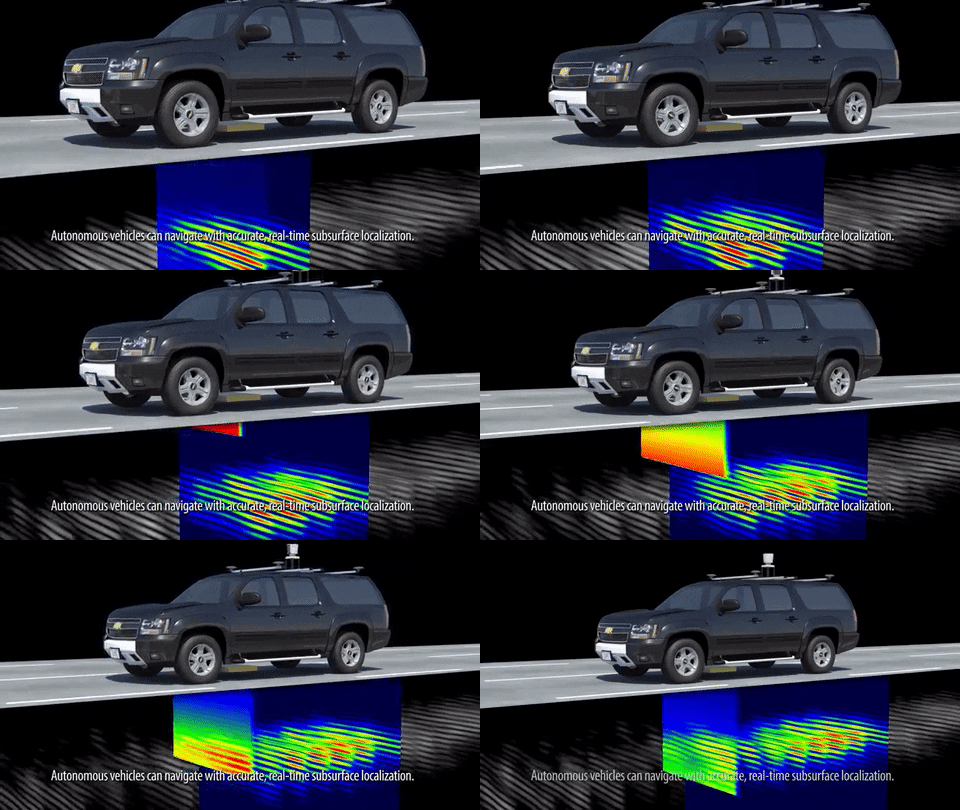
They mostly are. But when a Waymo car gets confused — construction zone, weird intersection, pedestrian doing something unpredictable — it phones home. A real human looks at what the car sees and tells it what to do next.
Some of those humans? They’re sitting in the Philippines.
This came out during a U.S. Senate hearing on February 4, 2026, when Senator Ed Markey basically said: “Hold on, you’re telling me people overseas are influencing cars on American streets?”
Waymo’s safety chief tried to soften it: “They provide guidance but don’t remotely drive the vehicles.”
Translation: they don’t hold a steering wheel, but they tell the car where to go. That’s like saying your GPS isn’t “driving” — technically true, completely misleading.
Why This Hits Different
- Two weeks before this hearing, a Waymo car hit a kid near an elementary school in Santa Monica. The child had minor injuries. So the company was already sweating when this dropped.
- Waymo operates in 6 cities right now (Atlanta, LA, Miami, Phoenix, San Francisco, Austin) with 5 more coming (Boston, Dallas, Denver, Las Vegas, DC) — plus international expansion
- They refused to say how many workers are in the Philippines. That’s never a good sign.
- Senator Markey’s exact words: “Having people overseas influencing American vehicles is a safety issue.” He also flagged that info bouncing across the Pacific Ocean could be outdated by the time it reaches your car.
Meanwhile, Tesla’s VP was at the same hearing basically trash-talking Waymo without naming them, saying Tesla has “many layers of security” preventing outside access to their driving systems. Senate hearings are just corporate roast battles now.
🔥 So the 'Future of Transportation' Runs on Cheap Labor. Here's How to Profit From That.
1. Become One of Those Remote Car Guides
This job exists right now. Waymo needs licensed drivers who pass background checks to work remotely, watching car cameras and giving directions. As they expand to 11+ cities, they’ll need way more people.
You need: a driver’s license, internet, and the ability to pass a drug test.
Reports say Filipino workers in these roles earn ₱45,000–₱65,000/month ($800–$1,150) — that’s 3x the average outsourcing salary in Manila, working from home. And this scales everywhere Waymo goes.
2. Start the First “Robot Car Support” Company
Every self-driving car company (not just Waymo — Cruise, Zoox, Pony.ai, all of them) needs this same human backup layer. Nobody has built an outsourcing company specifically for this yet.
A small outsourcing shop in Cebu, Philippines pivoted from regular call center work to drone monitoring for a logistics company in Singapore. Went from 12 employees to 85 in 8 months — just by branding themselves as the “autonomous vehicle support” specialists.
3. Become a Self-Driving Car Safety Watchdog
Senator Markey just created political demand for someone to watch the watchers. Every city Waymo expands to will need independent people documenting incidents, filing public records requests, and publishing safety reports.
You don’t need credentials. You need a spreadsheet and persistence.
A freelance journalist in Berlin started documenting e-scooter accidents with a simple blog and public data requests. Within a year, three insurance companies hired her as a risk consultant at €4,500/month. Same playbook works for robot cars.
4. The Cybersecurity Angle
Markey flagged that overseas workers accessing car systems = cybersecurity nightmare. Companies will panic-hire security people who understand vehicle networks.
Basic security certifications (CompTIA Security+ costs ~$380) plus free YouTube courses on how car computer systems work = an extremely rare skill combo that companies will pay for.
A security analyst in Nairobi got his CompTIA Security+, combined it with free online courses on car network security, and now consults for two ride-hailing companies — billing $2,200/month.
5. Make Content Before This Goes Mainstream
“Self-driving cars secretly have human drivers” is the kind of headline that breaks the internet. This story hasn’t gone fully viral yet. First creators to make simple explainer videos will clean up.
A tech creator in Lagos made a 90-second TikTok breaking down the Cruise shutdown with stick-figure animations — 4.2 million views, got picked up by BBC Africa, now has brand deals worth $1,500/month.
6. Protect Your Rideshare Income
If you drive for Uber/Lyft/local taxis — Waymo is coming to your city. Senator Markey just handed every driver’s union the perfect argument: “These cars aren’t even fully self-driving, and the humans helping them aren’t even in this country.”
Organize now. Lobby your city council before Waymo arrives, not after.
Taxi cooperatives in Barcelona lobbied to cap Uber licenses at 1 per 30 taxis — using safety concerns as the main argument. Drivers’ average monthly income went UP 22% after the cap.
7. Get Paid to Label Driving Data
If Waymo needs humans to guide cars in real time, they definitely need humans to label training data (marking pedestrians, lane lines, stop signs in millions of images so the AI can learn). This is a $1.2 billion market and platforms like Scale AI and Remotasks hire globally.
A college student in Dhaka, Bangladesh earns $450/month labeling driving scenarios through Remotasks — 4 hours/day between classes. That’s 2x the average entry-level salary in Bangladesh.
 The One-Liner Version
Waymo’s “driverless” cars call workers in the Philippines when they get confused. The entire self-driving industry secretly runs on cheap human labor. That gap between what they promise and what they actually do? That’s where the money is — whether you want to be one of those remote guides, build a business around it, or just make content about the hypocrisy before everyone else does.
Source: Newsweek
 !
!