 Meta Planned to Sneak Facial Recognition Into Ray-Bans While 75 Groups Were Distracted
Meta Planned to Sneak Facial Recognition Into Ray-Bans While 75 Groups Were DistractedAn internal memo literally says “launch it when the activists are busy.” That’s not paranoia — that’s their slide deck.
75 organizations including the ACLU just told Zuckerberg to kill the feature entirely. Not fix it. Not add an opt-out. Kill it.
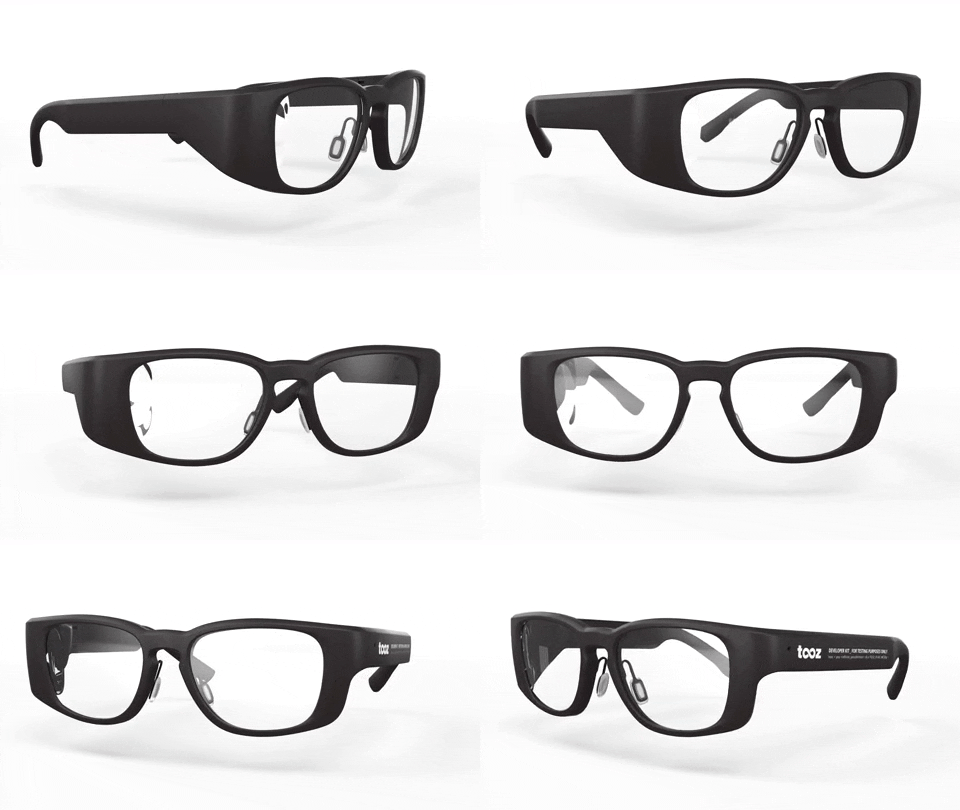
Meta’s “Name Tag” feature would let anyone wearing Ray-Ban smart glasses identify strangers on the street in real time — pulling their name, photo, and info from Meta’s AI. And an internal document says the company planned to launch it during political chaos, when the groups that would fight it were “focused on other concerns.”
🧩 Dumb Mode Dictionary
| Term | What It Actually Means |
|---|---|
| Name Tag | Meta’s internal code name for “point glasses at a stranger, instantly know who they are” |
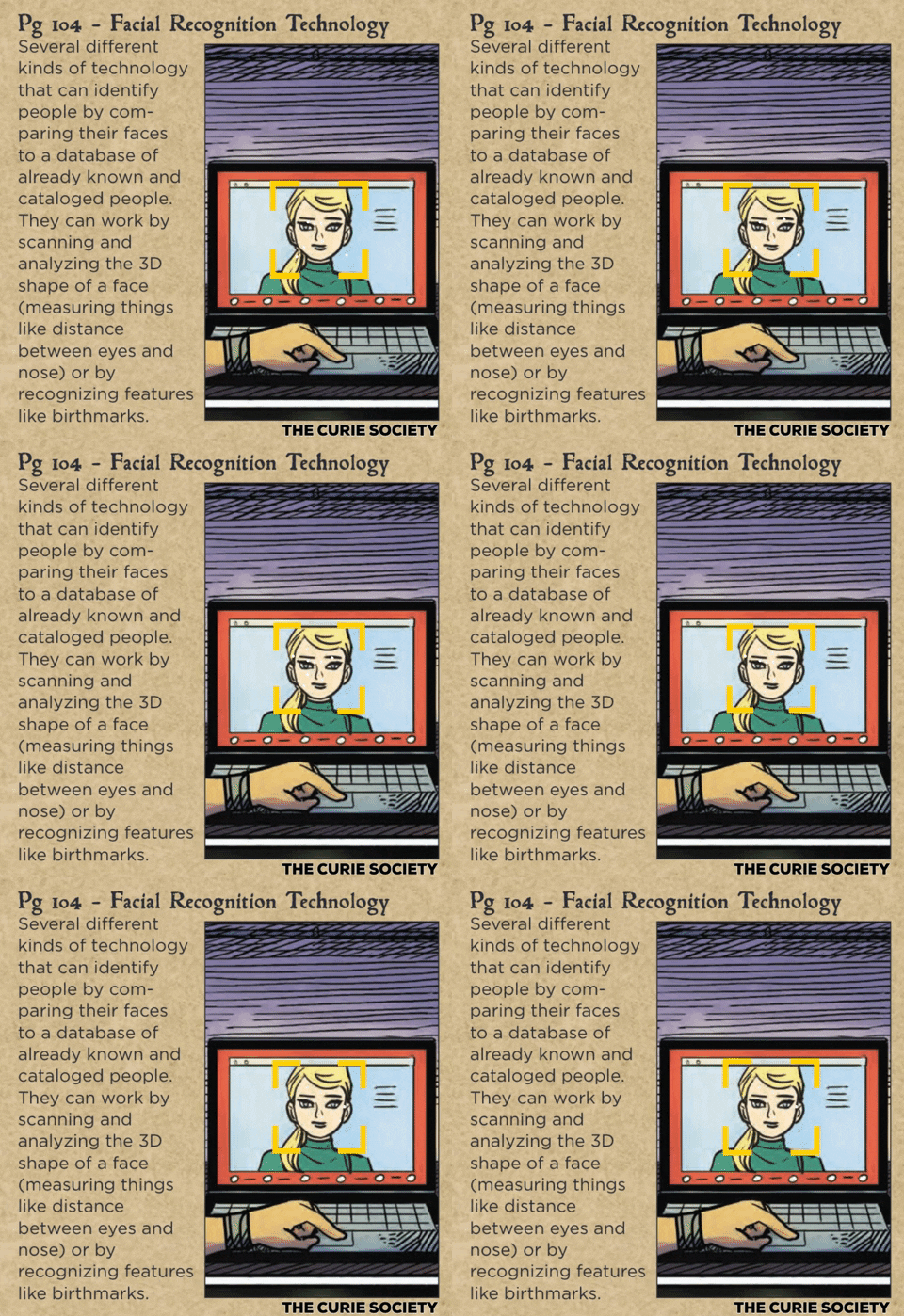
| Facial recognition | Software that maps your face and matches it against a database — like a fingerprint, but from across the street |
| Ray-Ban Meta | Normal-looking sunglasses with cameras and a speaker built in, made by Meta (the company that owns Facebook/Instagram) |
| Civil society groups | Organizations that fight for your rights — ACLU, privacy orgs, domestic violence shelters, etc. |
| Opt-out | A setting where YOU have to go find and turn off a feature that someone else turned on for you |
| Reality Labs | Meta’s division that builds VR headsets, smart glasses, and metaverse stuff |
📋 The Leaked Memo That Says It All
Here’s where the data gets ugly.
A memo from Meta’s Reality Labs division, first reported by the New York Times in February 2026, described the launch strategy for facial recognition on Ray-Ban glasses. The exact reasoning:
- The political environment was “dynamic” (their word for chaotic)
- Civil society groups would be “focused on other concerns”
- Translation: launch it when nobody’s watching
This isn’t conspiracy. This is a company’s own internal planning document. They said the quiet part out loud in a slide deck.
🔍 What 'Name Tag' Actually Does
Two versions were on the table internally:
- Version A (narrow): Identifies only people connected to the wearer on Meta platforms — your Facebook friends, Instagram mutuals
- Version B (broad): Recognizes anyone with a public Meta account, including Instagram
Even Version A is wild. You walk into a bar, glance around, and your glasses whisper in your ear who everyone is. Version B? That’s mass surveillance with a designer logo.
The tech uses Meta’s AI assistant to pull information about people in your field of view and display it on the glasses’ screen. No button press. No confirmation from the person being scanned. Just… look at them.
📊 The Numbers
| Stat | Number |
|---|---|
| Organizations that signed the letter | 75+ |
| Major orgs leading the charge | ACLU, Electronic Privacy Information Center, Fight for the Future, Access Now |
| Types of orgs included | Domestic violence shelters, immigrant rights groups, LGBTQ+ advocacy orgs |
| Their demand | Kill the feature entirely — not fix it, not add opt-outs |
| Meta’s previous facial recognition | Shut down Facebook’s face tagging in 2021 after backlash |
| Meta smart glasses sold | Millions of units across Ray-Ban and Oakley lines |
🗣️ What the Coalition Actually Said
The ACLU-led coalition letter didn’t ask for tweaks. Direct quotes from the demands:
- Bystanders in public “cannot consent to being identified”
- The feature “cannot be resolved through product design changes, opt-out mechanisms or incremental safeguards”
- They demanded Meta disclose any instances of Meta wearables already used in stalking or domestic violence cases
- They demanded Meta reveal all communications with federal law enforcement about the technology
But here’s the thing nobody mentions: Meta already killed facial recognition on Facebook in 2021. They deleted over a billion face templates. Then they started building the exact same thing — but strapped to your face and walking around in public. The hypocrisy isn’t even subtle.
⚠️ Why This Is Worse Than Phone Cameras
“But everyone has phone cameras already!” — sure. Here’s the difference:
- Phone camera: You have to hold it up, point it obviously, take a photo, then upload it somewhere. It’s visible. It’s awkward. People notice.
- Smart glasses: You look at someone. That’s it. No gesture. No notification. They have zero idea they were just scanned, identified, and catalogued.
The ACLU specifically called out how this would affect: survivors fleeing abusers, undocumented immigrants, protesters, sex workers, and anyone who needs anonymity to stay safe. An abusive ex wearing these glasses at a coffee shop could find someone who changed their name and moved cities — just by walking past them.
🤔 The Counter-Argument (And Why It Doesn't Hold)
Fair play — let me steelman Meta’s position for a second:
- The “narrow” version only identifies people you’re already connected to
- Opt-out features could theoretically let people remove themselves from the database
- The technology could help people with face blindness (prosopagnosia) or memory conditions
The data shows these arguments don’t survive scrutiny:
- “Narrow version” today becomes “broad version” in 18 months. Feature creep is Meta’s entire business model.
- Opt-out means you have to know the feature exists, have a Meta account to change settings, and trust Meta to respect that setting. History says no.
- Medical use cases can exist without making it the default for 3 billion users.
The coalition’s argument is simple: some capabilities shouldn’t exist as consumer products. Period.
Cool. Your Sunglasses Can Identify Strangers Now… Now What the Hell Do We Do? ( ͡ಠ ʖ̯ ͡ಠ)
🪞 The Anti-Recognition Armor Seller
Here’s the play nobody’s making yet: physical counter-surveillance products specifically designed to break facial recognition on wearable cameras. Not generic “privacy clothing” — products tuned to the exact IR sensors and camera specs in Meta Ray-Bans. Reflective lens coatings, micro-pattern stickers for hats, even specific hair accessory shapes that confuse Meta’s particular AI model. The research papers on adversarial patterns (shapes that fool AI) are free on arXiv. The manufacturing is AliExpress-tier cheap.
 Example: A 26-year-old industrial design student in Seoul starts selling “anti-scan” hat patches on Etsy and Korean marketplace Coupang after testing which patterns break Meta’s open-source Segment Anything Model. Prices them at $12. Gets 400 orders in the first week from domestic violence orgs buying in bulk for shelters.
Timeline: First prototype in 5 days using free papers + a $30 3D print. First sales within 2 weeks. The window lasts until Meta switches AI models — probably 6-12 months per version.
📡 The Opt-Out Bounty Hunter
When Meta eventually launches some version of this (and they will — the memo exists), there’ll be an opt-out process buried 14 menus deep. The play: build a one-click tool that mass-opts-out users across every facial recognition database simultaneously — Meta, Clearview AI, PimEyes, and the dozen smaller ones. Charge $3/person. The legal frameworks for this already exist in Illinois’ BIPA law and the EU’s GDPR right to erasure. You’re not building the tech from scratch — you’re automating the paperwork.
Example: A 29-year-old paralegal in Warsaw builds a Typeform-to-API pipeline that auto-generates GDPR deletion requests to 15 facial recognition companies. Charges €2.99 per batch. Picks up 2,000 users from a single Reddit post on r/privacy.
🕳️ The Reverse-Dox Detection Service
Flip the script. Instead of blocking facial recognition, USE it — to show people exactly what strangers can already find about them. Upload your own photo, run it through every public facial recognition engine (PimEyes free tier, social media reverse search, Google Lens), and deliver a “vulnerability report” showing everywhere your face appears online. Then sell the removal service. This is basically a penetration test, but for your face.
Example: A 24-year-old cybersecurity student in Lisbon offers “Face Exposure Audits” on Twitter/X for €15. Runs the client’s selfie through 6 free tools, screenshots every match, delivers a PDF. Then charges €40 to submit takedown requests for each one. First 50 clients come from a viral TikTok showing how easy it is to find someone’s full name from one photo.
🎭 The Physical Privacy Consultant for Events
Concerts, protests, private parties, corporate retreats — any event where people don’t want to be scanned by someone’s glasses. The play: become the “counter-surveillance consultant” who sweeps events for smart glasses. Meta Ray-Bans emit a detectable Bluetooth signal. You walk the venue with a Bluetooth scanner app, flag every pair, and give the event organizer a report. Venues are already banning Google Glass — this is the professional version of enforcement.
Example: A 31-year-old event security freelancer in Berlin adds “smart glasses detection” to their existing security packages. Uses nRF Connect (free Bluetooth analysis app) to identify Meta Ray-Ban MAC addresses at a 200-person corporate retreat. Charges €300 per event on top of existing security fee. Gets referrals from three more corporate clients within the month.
🧬 The Data Poisoning Kit
This one’s grey-hat and beautiful. Facial recognition works by matching your face against a stored template. If you upload enough slightly-wrong photos of yourself to Meta platforms — same face, different lighting, subtle filter distortions — you can corrupt your own template until it stops matching reliably. The concept is called “data poisoning” and researchers at University of Chicago built a free tool called Nightshade that does this for images. The play: package this as a consumer-friendly “facial recognition scrambler” — users upload 10 selfies, your tool generates 50 corrupted variants, and gives them a schedule for slowly replacing their profile photos across platforms.
Example: A 22-year-old comp-sci dropout in Buenos Aires forks Nightshade’s open-source code, builds a simple web UI, and markets it as “FaceBlur” on Product Hunt. Free tier generates 5 corrupted images, paid tier ($5/month) generates unlimited + auto-uploads to Instagram. Gets 800 signups in launch week after a Hacker News front page post.
🛠️ Follow-Up Actions
| Step | Action |
|---|---|
| 1 | Check if your face is already in public databases — run your photo through PimEyes (free limited search) |
| 2 | Read the ACLU coalition letter to understand exactly what’s being demanded |
| 3 | If you’re in the EU, file a preemptive GDPR request to Meta asking what biometric data they hold on you |
| 4 | Research adversarial pattern papers on arXiv — the counter-tech is free |
| 5 | If you run events, start looking into Bluetooth scanning tools to detect smart glasses |
 Quick Hits
| Want | Do |
|---|---|
| Know if someone’s glasses are scanning you |
Download nRF Connect — it detects Bluetooth signals from Meta Ray-Bans nearby |
 Remove your face from recognition databases Remove your face from recognition databases |
Start with PimEyes opt-out + file GDPR/CCPA deletion requests |
 Understand the full legal argument Understand the full legal argument |
Read the ACLU press release — it’s surprisingly readable |
 Protect people at physical risk Protect people at physical risk |
Share this with anyone in domestic violence advocacy — the ACLUM “Eyewear Not Spywear” campaign has resources |
 Turn this into income Turn this into income |
Pick one hustle above — the anti-recognition products and opt-out automation have the lowest barrier to entry |
Meta killed facial recognition once because people got angry. Then they built it again — but this time, it walks around and looks at you. The memo wasn’t a leak. It was a preview.
 !
!