 Tim Draper Funded a Startup That Wants to Grow Your Backup Body — Without a Brain
Tim Draper Funded a Startup That Wants to Grow Your Backup Body — Without a Braina Richmond, California startup has been quietly pitching billionaires on “brainless clones” — and no, this isn’t an April Fools joke
R3 Bio wants to grow a copy of your body with “only enough brain structure to be alive” — so you can harvest its organs or transplant your brain into it when you get old.
MIT Technology Review just blew the lid off this thing. Investors include billionaire Tim Draper. The US government’s ARPA-H has been “very collaborative.” And the founder built his first lab in a Bay Area garage.
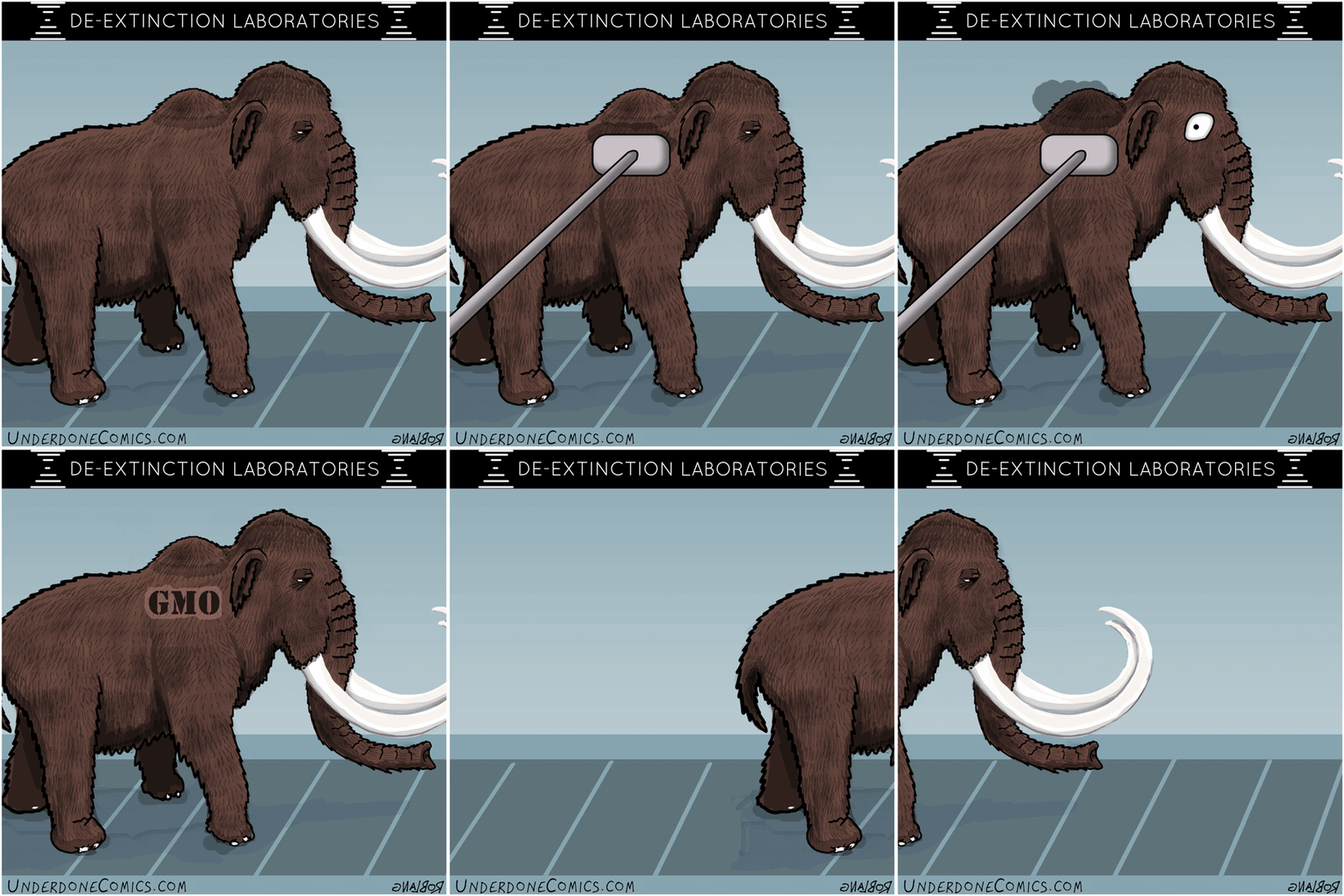
🧩 Dumb Mode Dictionary
| Term | What It Actually Means |
|---|---|
| Brainless Clone | a copy of your body grown without a functioning brain — just organs and tissue keeping it alive |
| Organ Sack | R3 Bio’s polite word for a body they grow specifically to rip organs out of |
| Non-sentient | can’t think, feel, or experience anything (allegedly) |
| ARPA-H | US government agency that funds wild health moonshots — think DARPA but for medicine |
| Full Body Replacement | literally putting your brain in a younger clone body. yes, they’re serious |
| Kind Biotechnology | sister company working on animals that “completely lack ability to feel, think, or sense the environment” |
| Somatic Cell Nuclear Transfer | the cloning method — same tech that made Dolly the sheep in 1996 |
📖 The Backstory Nobody Was Supposed to See
- R3 Bio is based in Richmond, California. Founded by John Schloendorn (PhD, biotech outsider, garage-lab guy) and co-founded by Alice Gilman (CEO)
- They publicly say they’re building monkey “organ sacks” for scientific research — no brains, no sentience, just tissue platforms
- But MIT Technology Review got hold of 2023 fundraising documents, meeting agendas, and internal comms that reveal the real endgame
- The real pitch to investors: grow human brainless clones as backup bodies. Need a kidney? Grow yourself. Need a whole new body? Transfer your brain
- They deliberately kept this quiet to avoid “clickbait headlines and public backlash.” lmao well that worked out great
💰 Who's Backing This
| Investor/Partner | Details |
|---|---|
| Tim Draper | Silicon Valley billionaire VC, early Bitcoin evangelist |
| Immortal Dragons | Singapore-based longevity fund |
| LongGame Ventures | Life-extension focused investors |
| ARPA-H | US gov health innovation agency — program manager Jean Hébert described an “informal but very collaborative” relationship with Schloendorn |
One person who attended Schloendorn’s pitch described it as a “close encounter of the third kind” meets “Dr. Strangelove.”
🔬 What They've Actually Done (vs. What They Claim)
- MIT Technology Review found no evidence R3 has cloned humans or animals larger than rodents
- No evidence they’ve even created a single “organ sack” yet
- Their current work: testing cloning techniques on monkeys at a Caribbean facility
- Related company Kind Biotechnology (New Hampshire, run by Justin Rebo) filed patent applications showing mice without complete brains, and others missing faces or limbs
- Human cloning is illegal in many countries
- Growing a brainless clone to birth currently requires… a human surrogate. Artificial wombs are still sci-fi
so to recap: they’ve got investor money, government vibes, patent drawings of faceless mice, and a dream. cool cool cool.
🗣️ What Scientists Are Saying
- Jose Cibelli (Michigan State University): “It sounds crazy, in my opinion. There are so many barriers.”
- Human cloning is unsafe. Few competent experts would dare participate
- The ethics of creating even “non-sentient” human tissue bodies are completely uncharted
- Alice Gilman’s response when pressed: the “team reserves the right to hold hypothetical futuristic discussions” about brainless human clones
- Schloendorn on LinkedIn (2024): “We will try to do it in a way that produces defined societal benefits early on, and we need to be prepared to take no for an answer”
😤 The Elephant(s) in the Room
- Who decides “non-sentient”? If the clone body has brainstem functions to stay alive, where exactly is the line?
- Only for billionaires. Growing and maintaining a clone body for decades would cost… a lot. This isn’t healthcare — it’s life extension for people who already own islands
- The surrogate problem. Right now you’d need a woman to carry the brainless clone to term. The ethics of that are catastrophic
- The Island (2005) was literally about this. So was Never Let Me Go. We made the dystopian fiction and then just… built it?
deadass this is the first startup pitch deck that doubles as a horror movie screenplay.
Cool. A garage scientist wants to grow me a spare body. Now What the Hell Do We Do? (⊙_⊙)
🧬 1. Learn the Actual Bioethics Before You Have an Opinion
Most people hear “brainless clone” and either go full Black Mirror panic or full “shut up and take my money.” Neither is helpful. The real questions — consciousness thresholds, surrogate rights, access inequality — are worth understanding before you argue about it online.
 Example: A bioethics grad student in Berlin started a Substack breaking down longevity startup claims. She hit 12K subscribers in 4 months and now consults for two EU regulatory bodies.
Timeline: Start reading Stanford’s bioethics primers + following @bioethicsdotnet. Within 2-3 months you’ll be more informed than 99% of people screaming on Twitter.
📝 2. Track the Longevity Startup Bubble
R3 Bio isn’t alone. There’s Altos Labs ($3B), Retro Biosciences (backed by Sam Altman), Calico (Google), and now Kind Biotechnology doing faceless mice. This is a massive investment wave and where there’s hype, there’s opportunity — and fraud.
Example: A freelance journalist in São Paulo built a tracker of longevity startup funding claims vs. actual peer-reviewed results. She licensed it to a biotech VC firm for $8K/month.
🛡️ 3. Push for Regulatory Frameworks Now — Not After
R3 Bio’s own documents show they moved quietly to avoid regulation. ARPA-H is collaborating informally. There’s no international framework for human clone body creation. If you work in policy, law, or advocacy — this is your moment.
Example: A legal researcher in Nairobi wrote a 40-page policy brief on human cloning regulation gaps for the African Union’s science commission. It got cited in three national parliamentary debates.
💡 4. Build Content Around the 'Billionaire Immortality' Narrative
This story will be everywhere for weeks. The hot take economy is real. Whether you make YouTube videos, TikToks, podcasts, or long-form essays — “Silicon Valley wants to grow spare bodies for rich people” is engagement gold.
Example: A filmmaker in Lagos made a 9-minute documentary-style YouTube video comparing The Island’s plot to R3 Bio’s pitch deck. It hit 2.1M views and landed him a sponsorship from a VPN company.
🔧 5. If You're in Biotech — Watch the Patent Filings
Kind Biotechnology already has patent applications showing animals without brains, faces, or limbs. These patents will define what’s legally possible. If you’re a researcher, student, or startup founder in adjacent biotech — tracking these filings is both ethical due diligence and competitive intelligence.
Example: A patent analyst in Taipei built a dashboard tracking all CRISPR + cloning patent applications filed in the last 18 months. She sells access to biotech VCs for $500/month and has 40+ subscribers.
🛠️ Follow-Up Actions
| Action | Tool/Resource |
|---|---|
| Read the full MIT Tech Review investigation | technologyreview.com |
| Track longevity startup funding | Crunchbase + PitchBook + Google Alerts |
| Monitor patent filings | Google Patents + USPTO PAIR |
| Follow bioethics discourse | @bioaborto, Stanford CEHG, Hastings Center |
| Watch the ARPA-H connection | ARPA-H program announcements + FOIA requests |
 Quick Hits
| Want to… | Do this |
|---|---|
| Understand cloning basics |
Read “The Gene” by Siddhartha Mukherjee, then the Dolly the Sheep case study |
 Know if this is legal Know if this is legal |
Human cloning is banned in 70+ countries. The US has no federal ban — only some state laws |
 Follow the money Follow the money |
Tim Draper + Immortal Dragons + LongGame Ventures. Search Crunchbase for R3 Bio |
 Read the source investigation Read the source investigation |
MIT Technology Review, March 30, 2026 |
 Track the sister company Track the sister company |
Kind Biotechnology, New Hampshire — Justin Rebo, patent filings for brainless animals |
a guy built a lab in his garage, pitched billionaires on growing spare humans, got government attention, and the wildest part? nobody stopped him. we are so cooked.
 !
!